Place
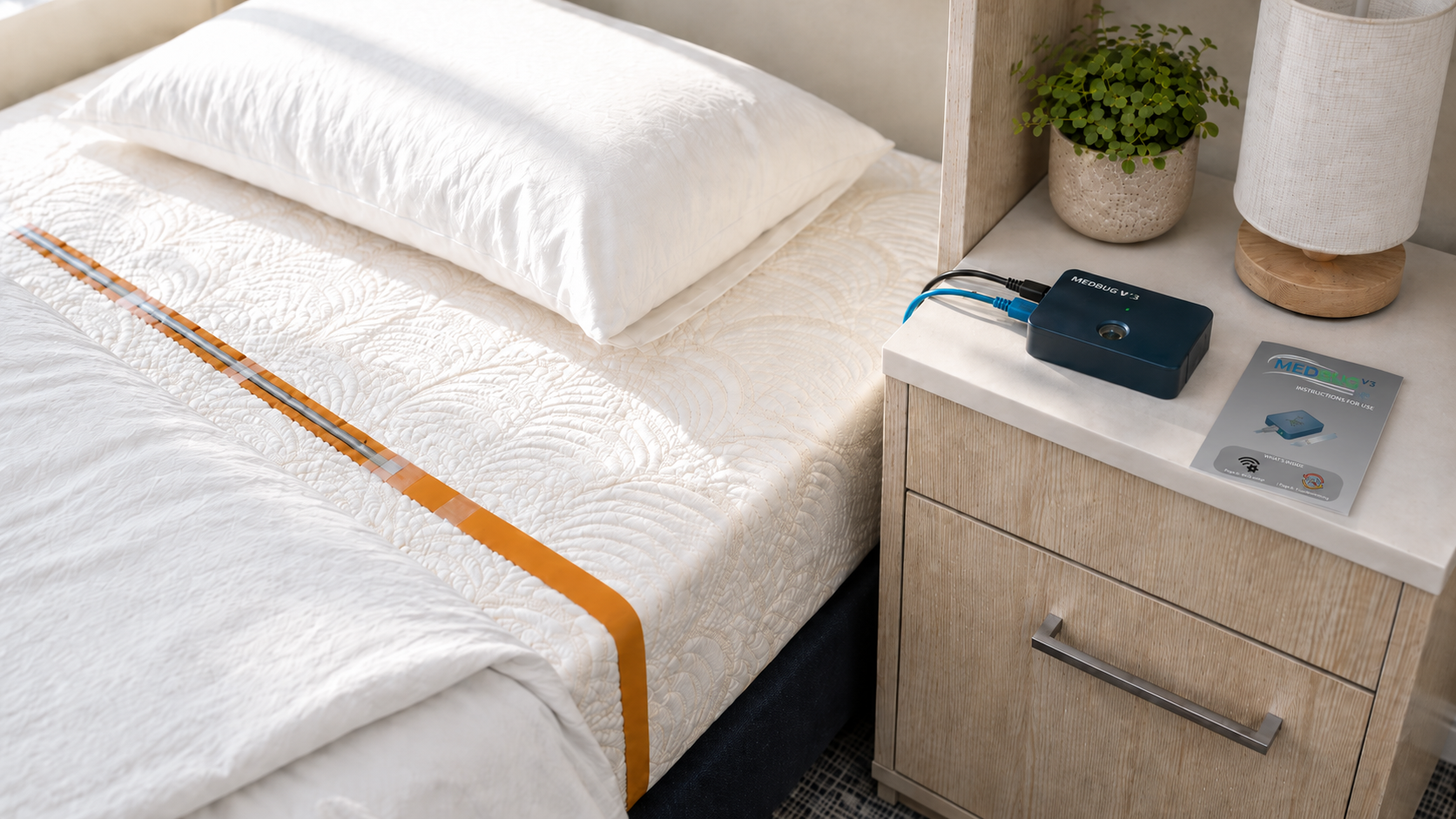
Place the MedBug strip on top of the mattress at mid-chest, under the mattress protector, follow the study protocol, and leave it in place for multi-night recording.
User manual PDF · click to downloadMedBug combines a bedside sensor kit, the SENSE analysis models, and study-ready reporting so research teams can investigate sleep architecture and respiratory events across many nights — without attaching electrodes or wearable sensors to participants.
Research-stage platform for investigation and collaboration. Not a medical device.
Flinders University · FHMRI Sleep Health (Formerly Adelaide Institute for Sleep Health) · South Australia
Developed with multidisciplinary sleep scientists at Flinders University
Product architecture
Hardware, models, cloud workflow and reports are separate layers — linked for multi-night studies.
Mattress sensor strip and bedside unit for unobtrusive overnight capture.
Analysis models for sleep staging, respiratory events, ventilation/effort and vital signs.
Quality control, model runs and traceable configuration for each study period.
Plots, tables, exports and PDF summaries for investigator review.
The platform
The MedBug SENSE models turn mattress-based overnight signals into sleep-stage, respiratory-event and physiology outputs for research workflows — designed for multi-night home and laboratory studies.
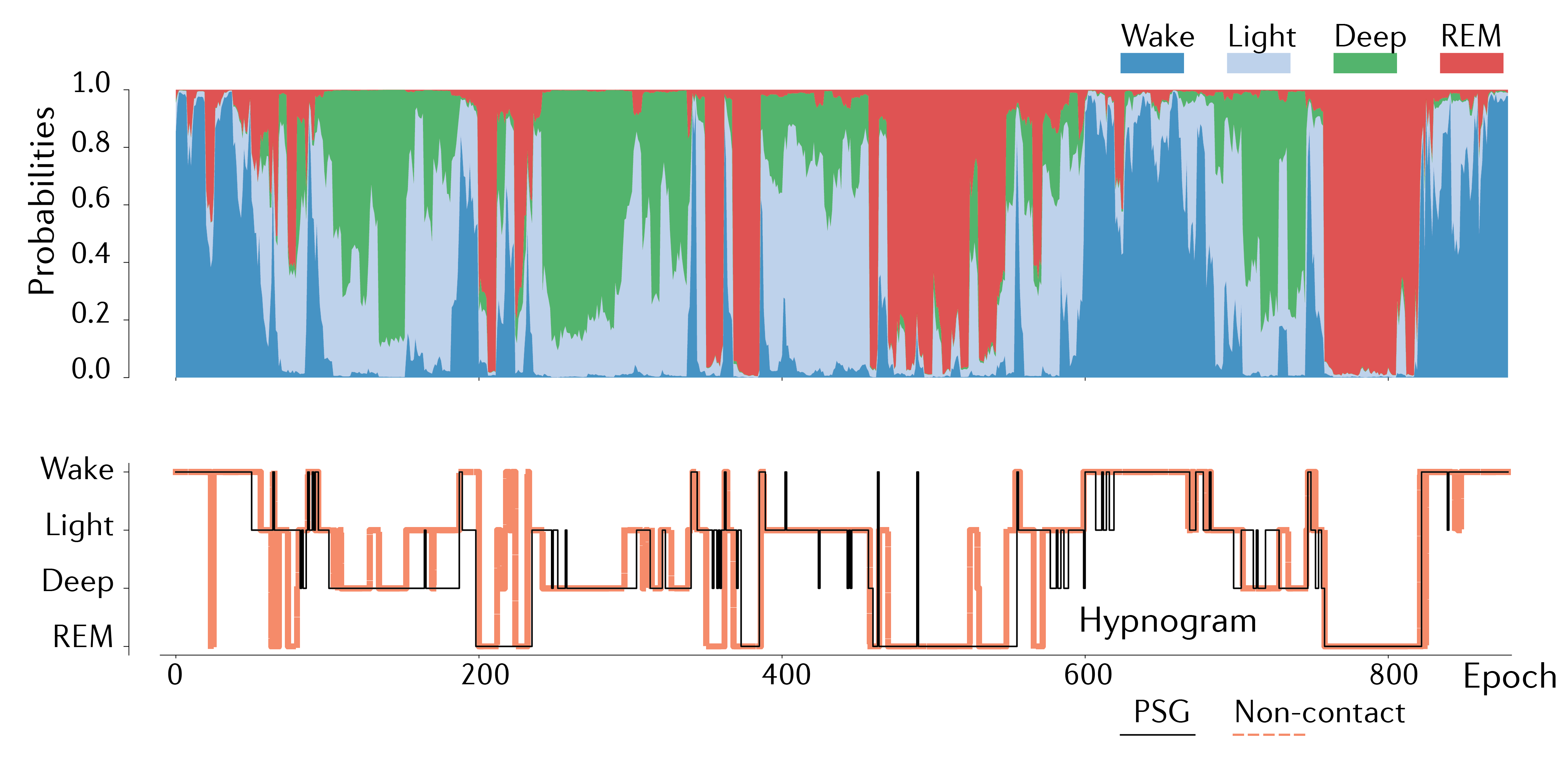
Mattress-based sensing turns body motion and cardiorespiratory signal into structured sleep-stage output for research workflows.
Read more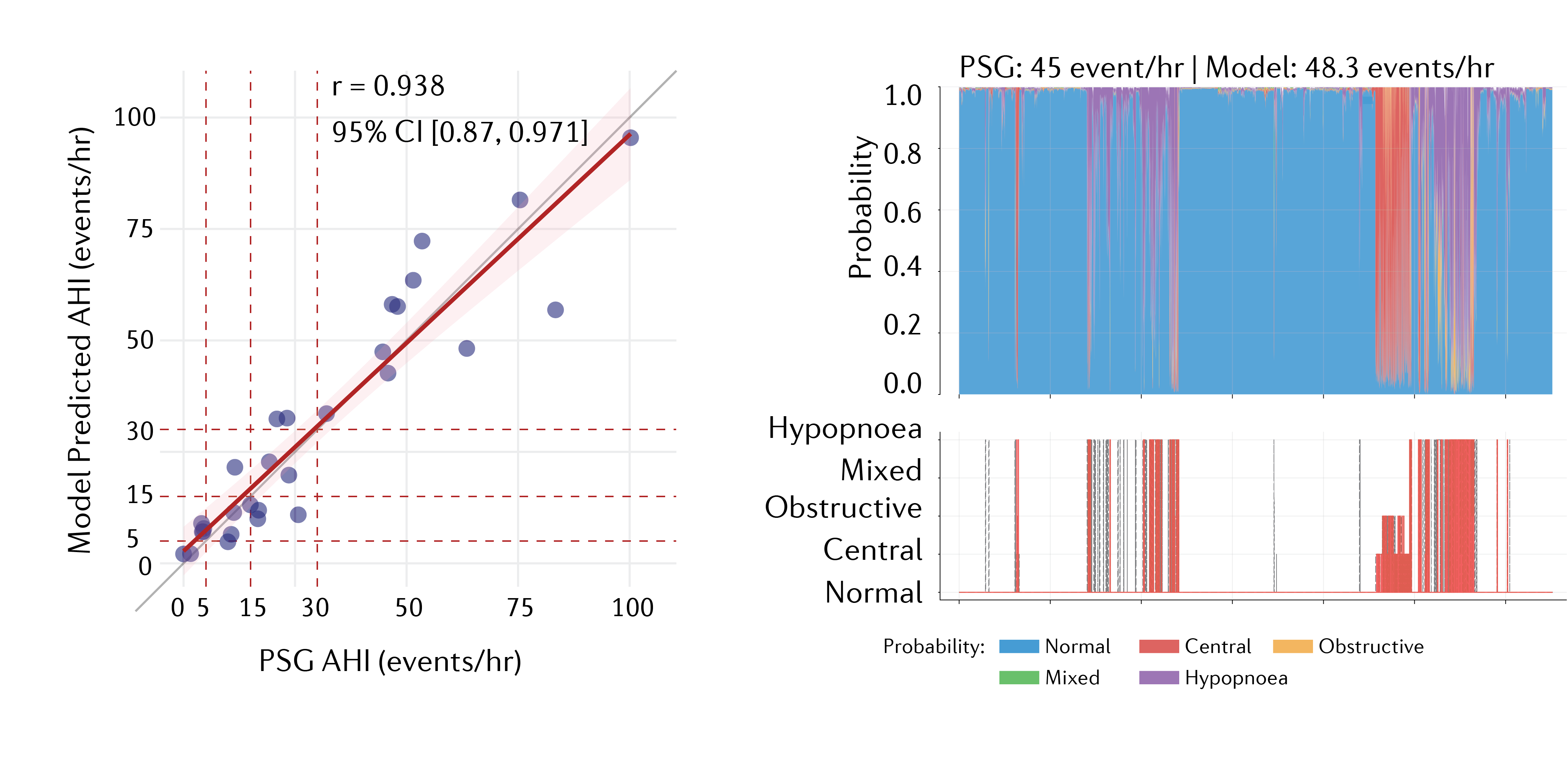
Event-by-event classification of apnoeas, hypopnoeas and arousals across the night — with AHI reconstruction and severity summaries for research review.
Read more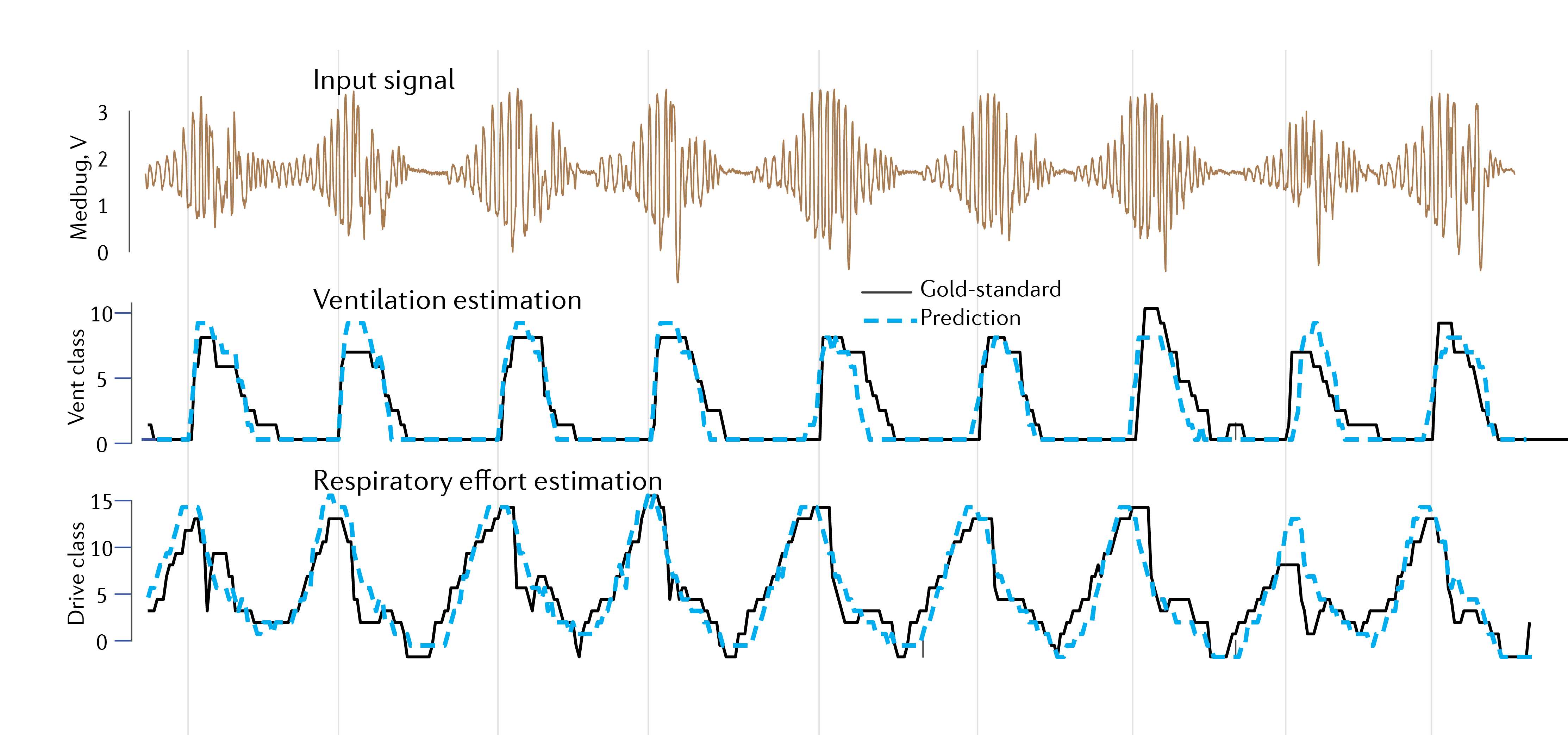
See how much air is moving and how hard the body is working to breathe — the physiology behind events, not just the event count.
Read more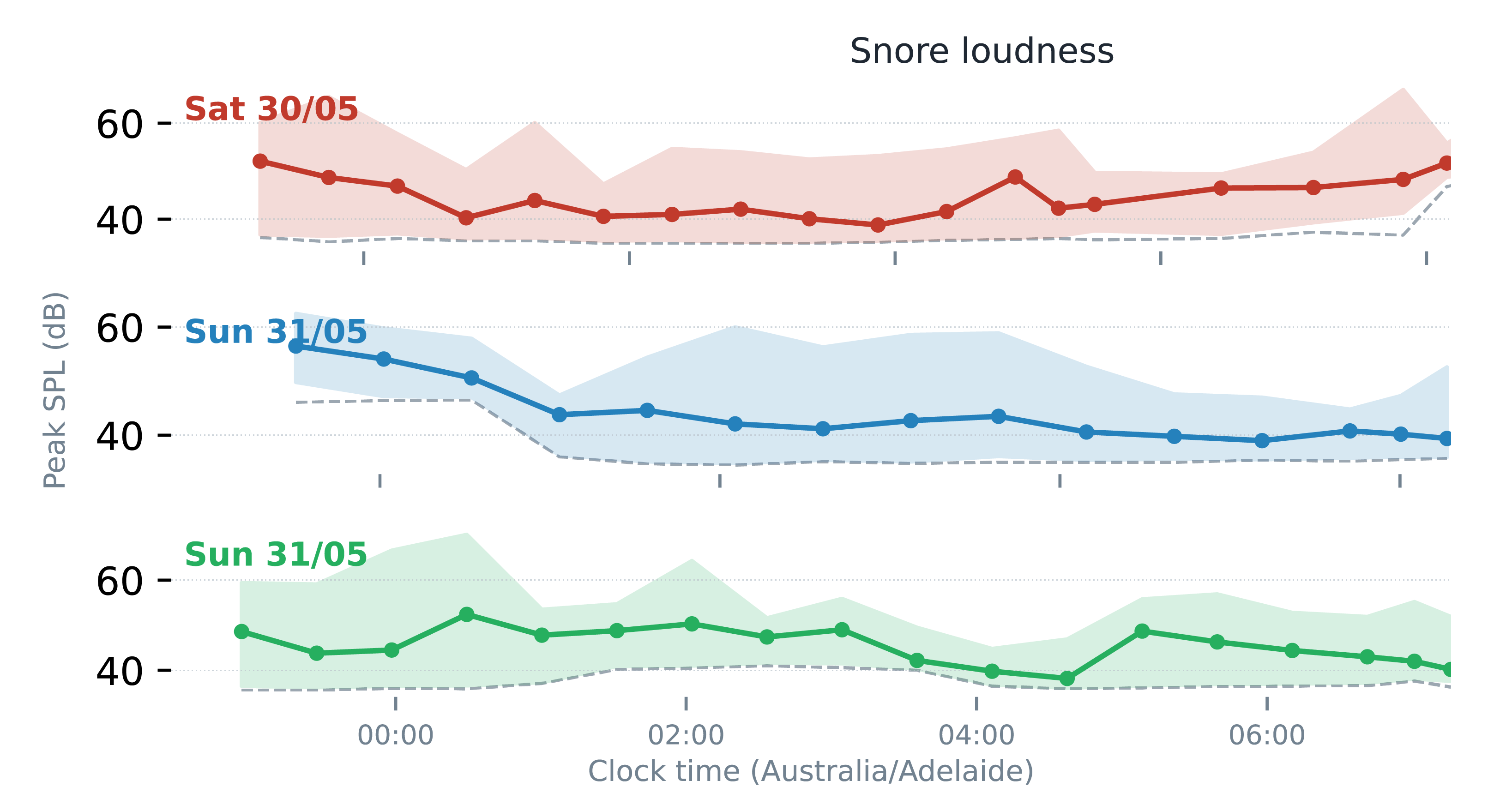
Audio-feature workflows map snore events and overnight acoustics alongside the rest of the physiological picture.
Read more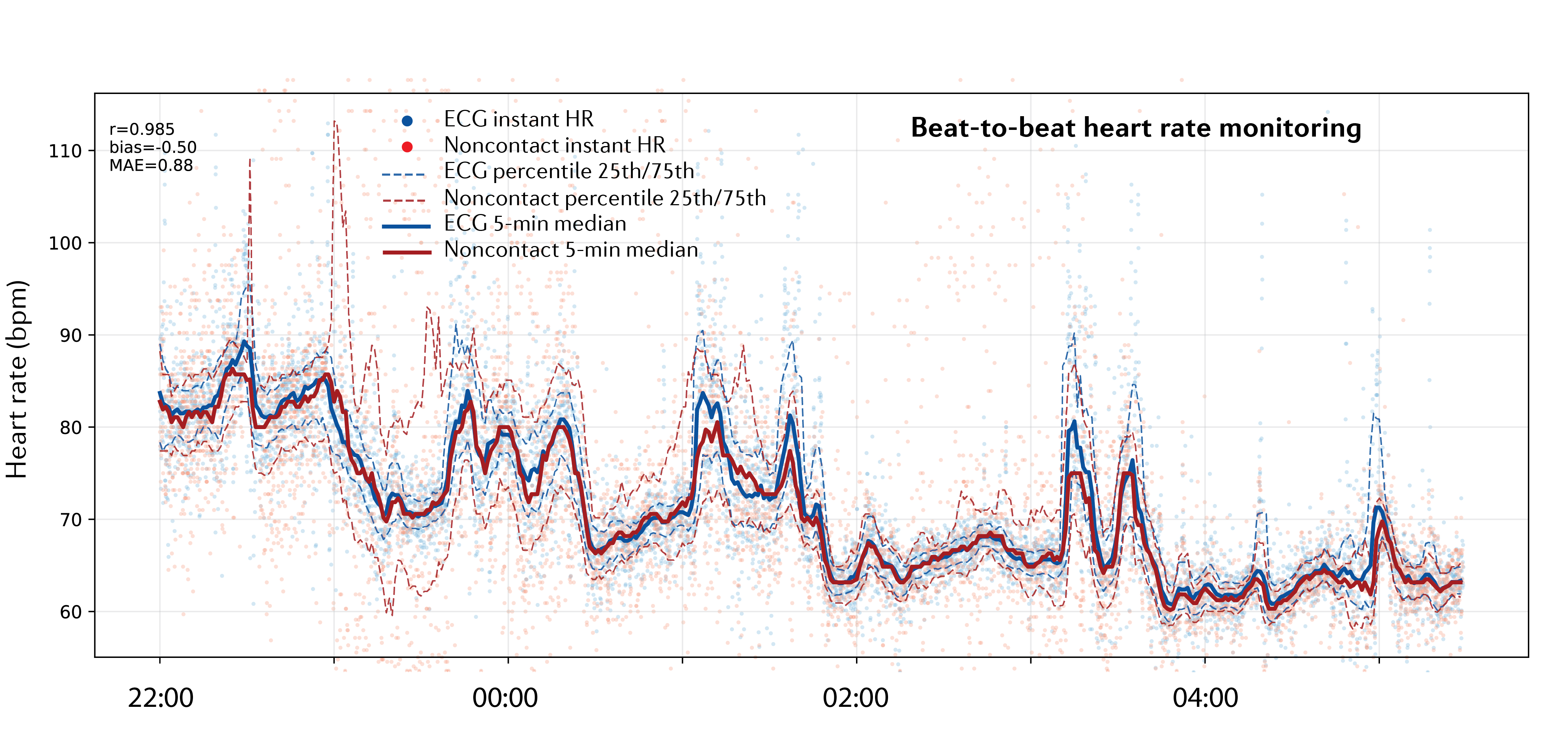
Heart-rate and respiratory-rate profiles derived from overnight piezo signals — continuous physiology without wearables.
Read more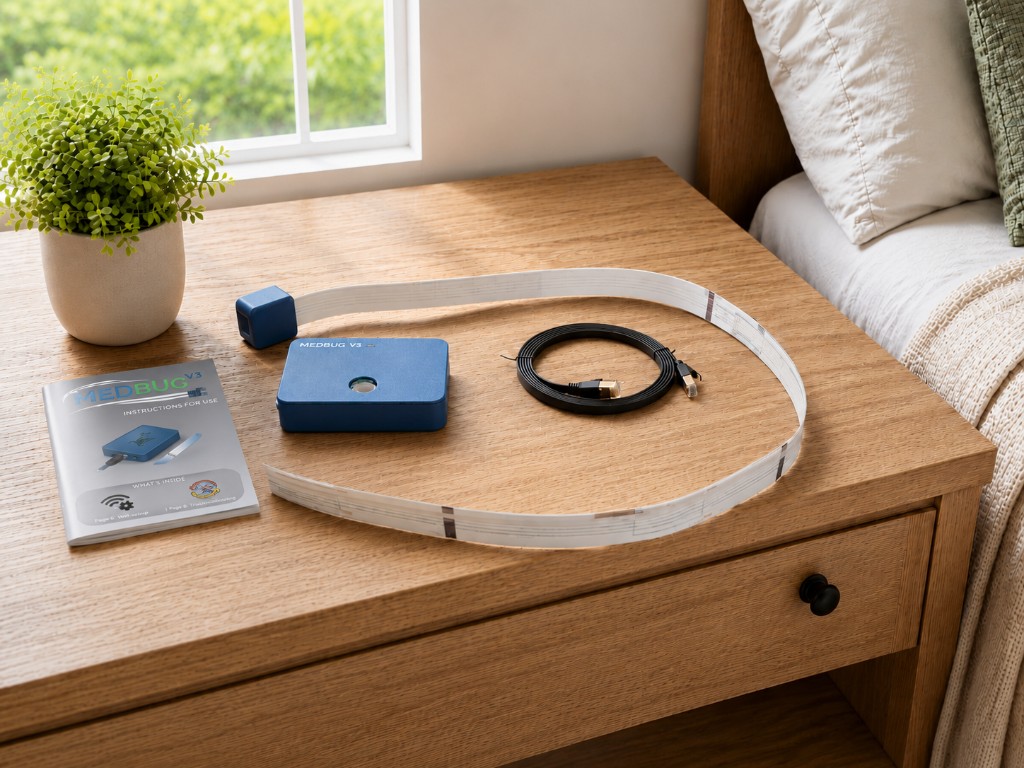 MedBug 3 kit
Third-generation platform
A mattress-based sensing approach brings physiological, acoustic and contextual signals together for multi-night sleep research in laboratory and home settings.
Evidence
Mattress-based sleep-stage output compared with polysomnography reference scoring.
Apnoea, hypopnoea and related events scored overnight, then summarised as AHI against PSG.
Continuous ventilation and respiratory-effort patterns beyond nightly event counts.
Heart rate and breathing rate from under-mattress motion, checked against ECG and airflow.
The science
MedBug’s modular workflow moves from mattress sensing to quality control, model inference and human-readable reporting with a traceable run history for research teams.
See validation evidence →How it works
On-mattress sensing for laboratory and home studies — without electrodes on the participant.
Place the MedBug strip on top of the mattress at mid-chest, under the mattress protector, follow the study protocol, and leave it in place for multi-night recording.
User manual PDF · click to downloadRecord overnight BCG, static pressure and near-body temperature, plus multi-wavelength light, ambient temperature and air quality for study context — across continuous nights without wearable compliance burden.
When out-of-bed is detected, overnight data uploads remotely and MedBug SENSE models run sleep staging, respiratory events and AHI, plus ventilation and effort physiology.
Review study plots, tables and PDF outputs — including high-resolution, low-level model probabilities down to 1-second resolution for research use.
Sample report PDF · click to download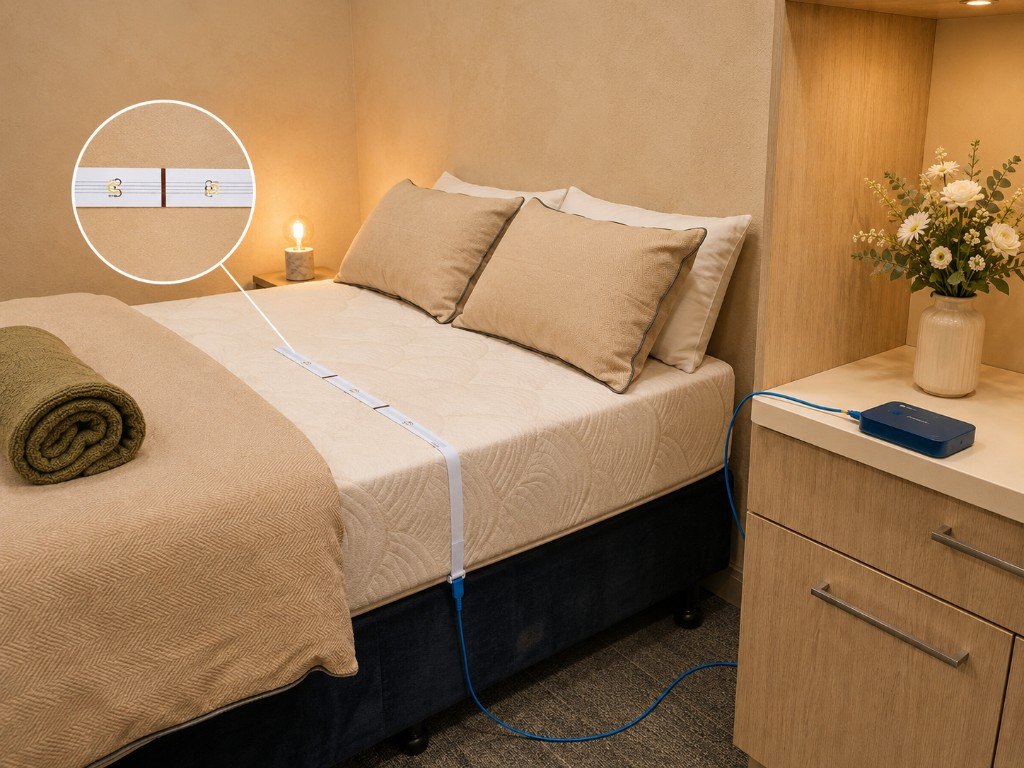 On-mattress setup
Who it is for
MedBug is a Flinders research platform for multi-night sleep studies. We welcome sleep researchers, clinical collaborators, technology partners — and early conversations with people exploring support — with science and study evidence at the centre.
Research developed within Flinders University sleep-health programs in South Australia.
Sleep researchers — multi-night staging, breathing events and physiology outputs for protocol-driven studies. Researcher path →
Clinical collaborators — evaluate at-home investigation approaches within research-stage boundaries. Clinical path →
Partners & investors — technology integration, commercialisation or early investment that supports the research programme. Partner path →
Primary next step
Tell us about your study population, protocol needs or collaboration idea. This is the main contact path for research, partnership and early investment interest.
Interest registered
Your response has been received. The MedBug research team can now follow up with you.
Controller: MedBug research project, Flinders University (FHMRI Sleep Health), South Australia. Legal basis: your consent, given when you submit this form (and, where applicable, Flinders University’s legitimate interest in responding to research collaboration enquiries). What we collect: name, work email, organisation, role, area of interest, location, optional message, and any role-specific qualification answers you provide. Purpose: to respond to research, pilot and partnership enquiries submitted through this form — not for marketing lists or sale to third parties. Retention: enquiry records are kept while the conversation is active, then deleted or anonymised within 24 months unless a collaboration requires ongoing contact (which we will confirm with you). Your rights: you may withdraw consent, or request access, correction or deletion of your enquiry details. Contact: email [email protected] or use this form again with “privacy request” in the message field. Institutional policy: see also the Flinders University privacy information. Do not include sensitive health information about identifiable patients.
MedBug outputs are generated from sensor data and machine-learning predictions for research and clinical review. They are not a substitute for attended polysomnography or independent clinical judgement. The platform is research-stage and is not marketed as a medical device. Validation metrics on this site refer to specific study cohorts; they are not general clinical performance claims.
Supported by